
At Dr. Sindhu’s Skin Clinic, we believe in regenerative care backed by science. Our GFC Therapy (Growth Factor Concentrate Therapy) is an advanced, non-surgical solution designed to rejuvenate hair growth and restore skin vitality using the body’s own healing potential. It’s a breakthrough treatment for those experiencing hair thinning, pattern hair loss, or skin aging—offering natural, long-lasting results without synthetic additives.


GFC Therapy uses a small amount of your own blood to extract a rich concentrate of growth factors. These powerful biological agents are then re-injected into the scalp or skin, depending on your concern, to stimulate regeneration, boost collagen production, and improve circulation.
Unlike traditional PRP, GFC delivers a higher concentration of purified growth factors, leading to faster results and more targeted healing. The procedure is US FDA compliant, safe, and performed under sterile conditions.
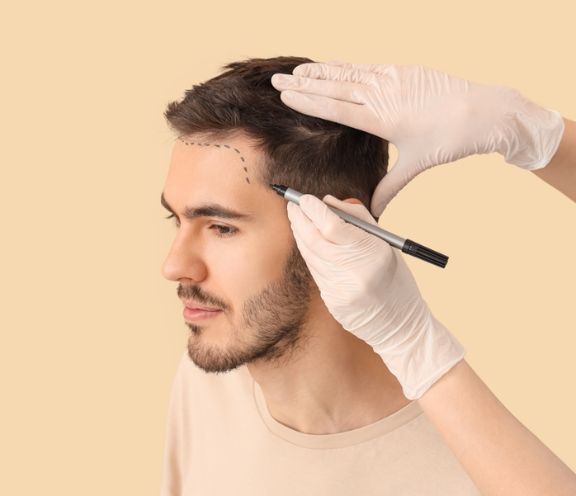

Every session is planned and supervised by Dr. Sindhu for safety and precision.
Our GFC kits ensure high concentration and purity of healing agents from your blood.
Completely natural therapy using your own bio-material—no artificial substances.
The process is quick, with little to no downtime and minimal side effects.
Visible improvement in hair thickness or skin texture that lasts with consistent sessions.

A detailed analysis is done to determine whether GFC is ideal for your hair or skin concern.
A small sample of your blood is drawn to isolate the growth factors.
Using specialized equipment, growth factors are separated and concentrated.
The GFC serum is then injected into the target area—scalp or skin.
Post-treatment care is shared for best healing and maintenance.
Yes. It’s a safe, autologous procedure using your own blood with no risk of allergies or rejection.
Hair fall typically reduces after the first session, with visible hair or skin improvements after 2–3 treatments.
GFC offers a more refined, concentrated form of growth factors, making it more effective and consistent than traditional PRP.